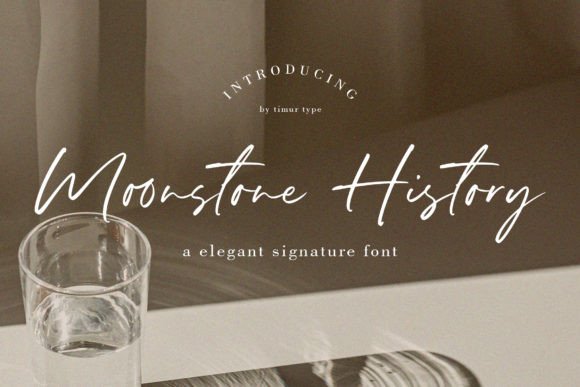
Moonstone History: Elevating Brand Identity with a Graceful Script Font
A Fresh Start for a Small Café’s Visual Identity
When I met with a local café owner looking to refresh her brand, the conversation quickly turned to fonts. She wanted her new menu, packaging, and social media graphics to feel warm, elegant, and consistent. We explored several options, but when we tested Moonstone History, the change was immediate. The flowing script style gave her brand a polished edge that matched the café’s cozy yet refined atmosphere.
Moonstone History is a graceful signature font that exudes elegance and sophistication. Its delicate lines and curves make it perfect for small businesses aiming to elevate their visual identity. Whether it’s printed on a bakery box or used in an Instagram story, this script font carries a timeless charm that helps brands stand out.
From Labels to Logos: Real-World Applications
One of the first applications we tested was a new menu layout. The café’s old menu used a generic sans serif font that felt flat and impersonal. Replacing the header text with Moonstone History brought a new sense of character to the design. The font’s natural flow made the menu feel more inviting, and customers responded positively to the change.
We also applied Moonstone History to product labels for a new line of homemade jams the café was launching. The soft curves of the font gave the labels a handcrafted, boutique feel. It worked beautifully on small spaces, as long as we kept the text short and legible. For longer descriptions, we paired it with a clean sans serif to maintain readability while preserving the elegant tone.
Business cards and thank-you notes were another area where Moonstone History shined. It’s a fantastic choice for short phrases and titles, especially when you want to convey warmth and professionalism. We used it for the café owner’s name and tagline, while a simple serif font handled the rest of the contact information.
Typography That Builds Trust and Recognition
Typography plays a bigger role in brand perception than many small business owners realize. The right font can shape first impressions, influence customer engagement, and reinforce visual consistency across platforms. Moonstone History helped the café build a stronger, more recognizable brand by giving it a unique typographic voice.
When we updated the café’s online shop banners and social media templates, the difference was clear. The font’s elegant curves added a sense of sophistication without feeling overly formal. This helped the brand appeal to a broader audience—both younger customers who value modern design and older patrons who appreciate classic aesthetics.
One important consideration when using Moonstone History is readability. While it’s stunning in headlines and display text, it’s not ideal for long blocks of copy, especially in small sizes. For packaging with tight label space or mobile banners, we made sure to keep the text minimal and paired it with a complementary font that ensured clarity.
Pairing Moonstone History with Other Fonts
Font pairing is essential when using a decorative script like Moonstone History. We found that combining it with a clean sans serif—like Montserrat or Open Sans—created a balanced, modern look. For a more traditional feel, we also tested it with a classic serif font such as Playfair Display, which gave the design a timeless, editorial quality.
When building social media graphics and digital ads, we used Moonstone History for the main headline and a minimalist sans serif for the supporting text. This combination ensured the design remained visually engaging while staying easy to read at a glance. For print materials like flyers and stickers, we added a touch of contrast by using bold sans serif for call-to-action buttons.
If you're considering Moonstone History for logo design, be sure to test it at different sizes and in various formats. It works best as a primary logo font when the business name is short and the design is clean. We made sure to export the café’s logo in multiple file types and tested it across packaging, signage, and digital assets to ensure consistency.
What to Know Before You Use Moonstone History
Before applying Moonstone History to any customer-facing material, it’s important to check what’s included in the font package. Most premium script fonts like this come with multiple styles, ligatures, and alternate characters that can enhance your design.
- Check for available weights and variations—Moonstone History may include bold, italic, or stylistic sets.
- Look for built-in ligatures and swashes that add personality to headlines and logos.
- Verify multilingual support if your brand serves international customers or uses multiple languages in marketing materials.
- Confirm the font’s licensing—make sure it allows for commercial use, especially if you’re printing packaging, creating merchandise, or designing templates for sale.
For digital use, ensure the font is web-optimized and compatible with platforms like Canva, Adobe Express, or Shopify. If you’re using it in logo design or branding templates, always save a high-quality version in vector format for scalability.